

A Clear Step by Step Look at the Process From Start to Finish
A kitchen tile installation project usually follows a clear path. First, the space is prepared. Then the surface is leveled. After that, tiles are laid, grouted, and sealed. The full job can take a few days, depending on the size of your kitchen and the tile type. Knowing what happens at each stage helps you plan your time and budget with confidence.
What You Need Before Starting
Before any tile goes on the wall or floor, a few things must be ready. Good planning makes the project smoother and helps avoid delays.
- Tile choice and design layout
- Accurate measurements of the space
- Clean and stable subfloor or wall surface
- Proper tools and materials
- A clear timeline for the work
Your installer may also check for hidden issues. These can include uneven floors, water damage, or old adhesive that needs removal. In many homes, kitchen tile installation falls under home improvement or remodeling services, so the prep work is just as important as the tile itself.
Step by Step: How the Process Works
Every project is a little different, but most follow the same order. Here is what you can expect.
- Site Protection: Cabinets, counters, and appliances are covered. This protects them from dust and debris.
- Surface Prep: Old flooring or backsplash material is removed if needed. The surface is cleaned and leveled.
- Layout Planning: Tiles are dry-fitted to plan the pattern. This step helps avoid tiny cuts at the edges.
- Adhesive Application: Thin-set mortar or tile adhesive is spread evenly with a notched trowel.
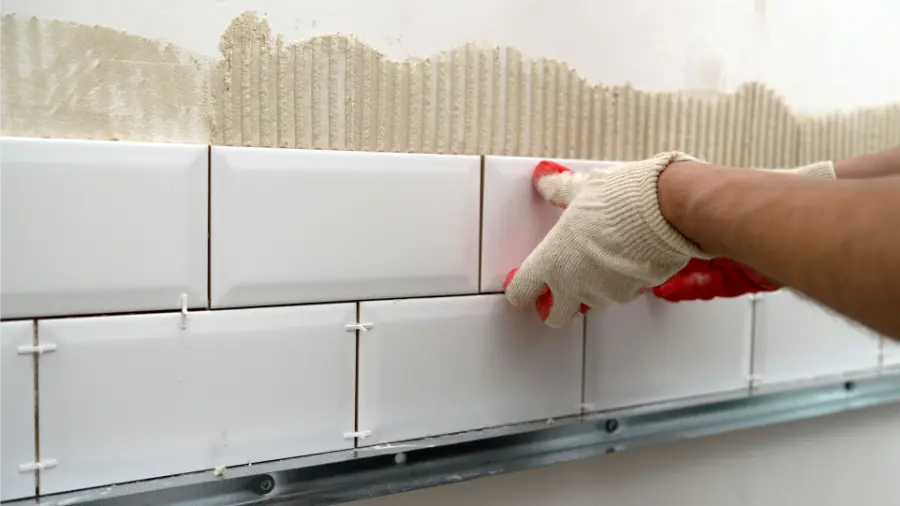
- Tile Placement: Tiles are pressed into place with spacers between them for even grout lines.
- Cutting and Fitting: Edge tiles are cut to fit around cabinets, outlets, and corners.
- Drying Time: The adhesive must cure. This can take 24 hours or more.
- Grouting: Grout is applied between tiles and wiped clean.
- Sealing: Some grout and tile types need sealing to protect from moisture and stains.
During kitchen tile installation, there will be noise and dust. You may need to avoid the space for a short time. For floor tile, you should stay off the area until it fully sets.

Common Mistakes to Avoid
Even small errors can cause big problems later. Here are mistakes that often happen during DIY tile jobs.
- Skipping surface leveling
- Using the wrong adhesive
- Not allowing enough drying time
- Poor spacing between tiles
- Rushing the grout cleanup
If the base is uneven, tiles may crack over time. If grout haze is not cleaned properly, the finish can look cloudy. Careful work at each step leads to a clean, strong result.
When to Call A Professional
Some small backsplash jobs may seem simple. But larger projects or floor tile work can be tricky. You may want professional help if:
- The subfloor has damage or soft spots
- You want a complex pattern like herringbone
- Large format tiles are being used
- The kitchen layout has many corners or tight spaces
- You are short on time
Pros have experience with measurements, cuts, and leveling. They also work faster and reduce waste. In many cases, hiring skilled installers saves money by avoiding costly mistakes.
Final Recommendation and Next Steps
If you are planning a kitchen tile installation in Fairfield, CA, it helps to work with a trained team that follows each step with care. At Tiger Tile, we handle prep, layout planning, and precise installation so your new tile looks clean and lasts for years. We keep our work area organized, respect your home, and stay on schedule. If you would like to talk about your project or get an estimate, call (707) 358-8339 and let us help you move forward with confidence.